How to Judge a Whiskey By Its Label: A Closer Look at What A Label Is Actually Telling You
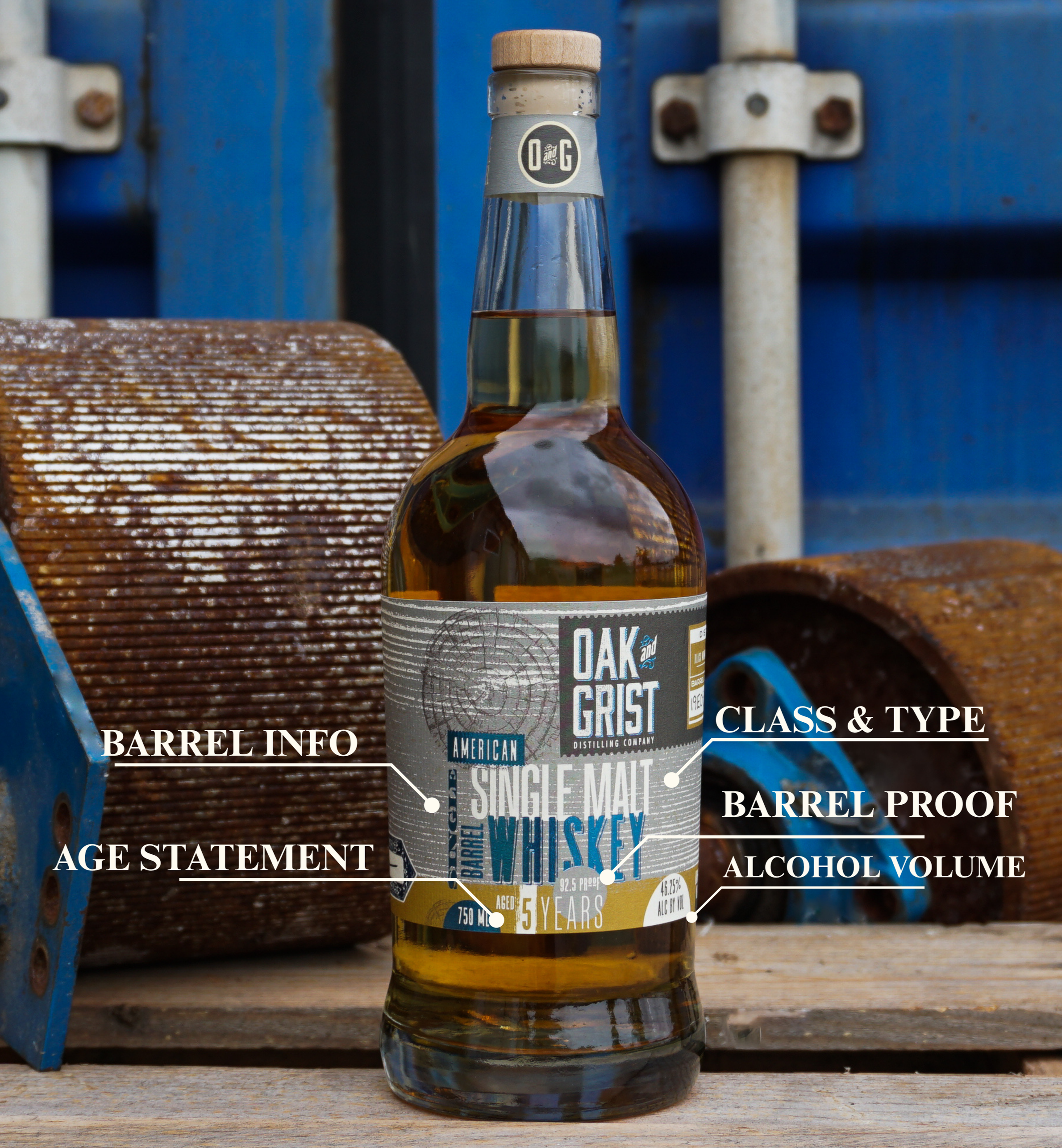
When you pick up a bottle of whiskey, you can find a surprising amount of information packed on a small piece of paper.
The name tells you what you're drinking. The proof tells you how strong it is. The batch number shows where that bottle fits into the distillery's production. Terms like American Single Malt, double-distilled, and new American oak help explain how the spirit got to your glass.
But what do all these details really mean?
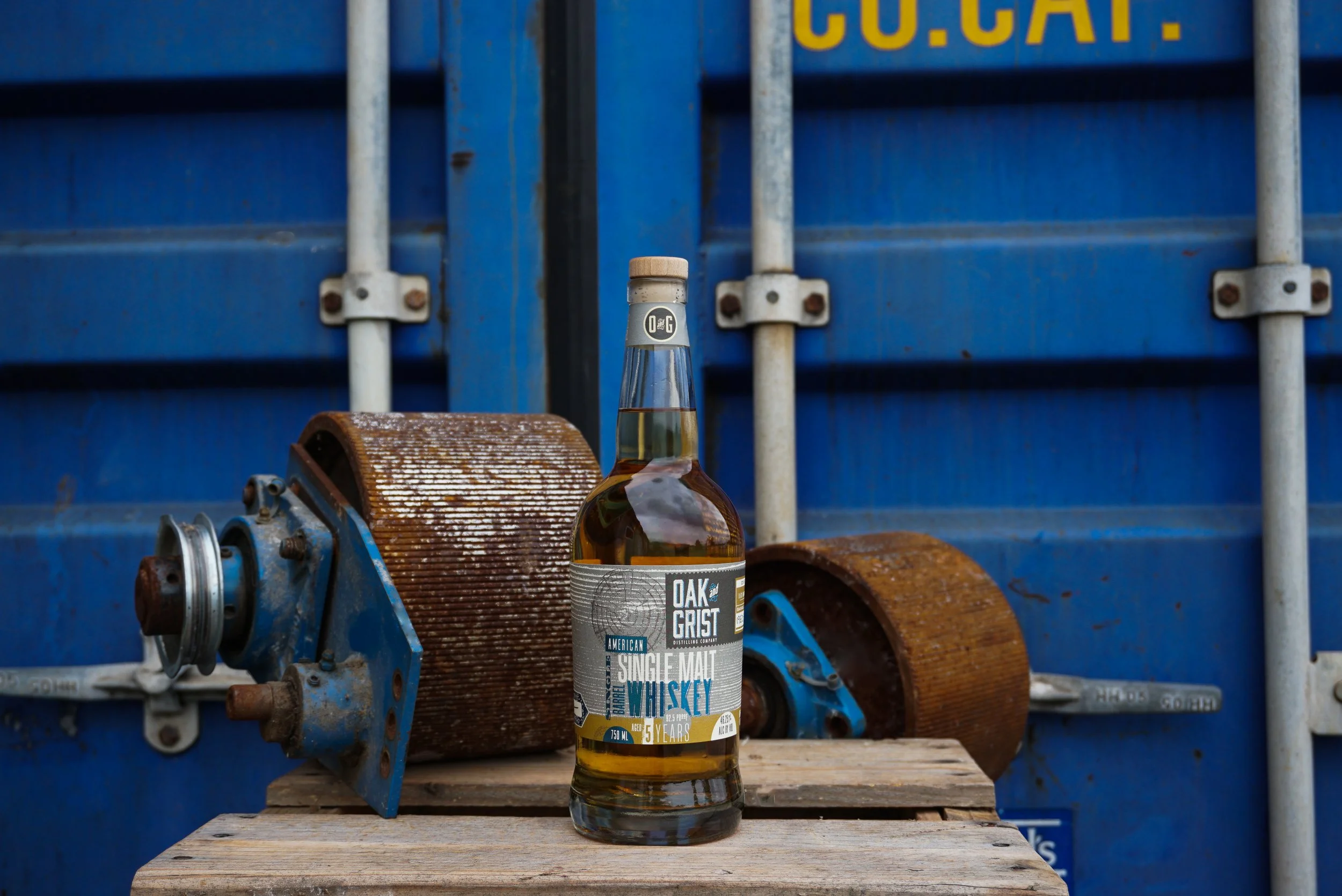
We decided to use one of our own bottles as an example. Here's how to read the label on our 5 Year Single Barrel American Single Malt Whiskey, along with some insight into the choices behind the words you'll see.
Start with the Big One: American Single Malt Whiskey
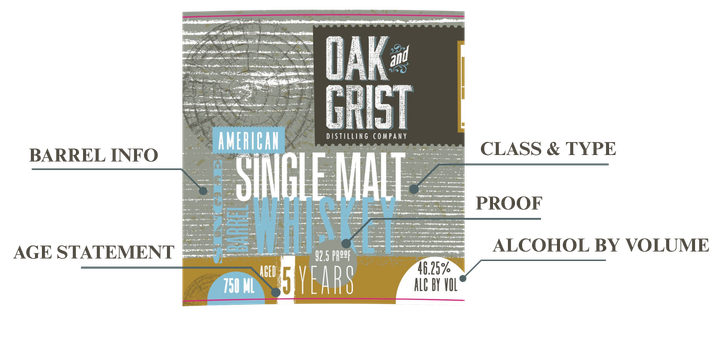
One of the first things you'll see on any of our whiskey labels is American Single Malt Whiskey
Those words matter to us.
Oak & Grist was founded around the idea of making a regionally inspired Single Malt Whiskey. We work with locally grown and malted barley and draw from Scottish distilling traditions while developing a style that belongs to this part of North Carolina. Until 2025 when the United States adopted an official Single Malt designation no whiskey left Oak & Grist as a “Single Malt” unless it met the Scottish definition. To see a complete list of requirements head to our Spirits Guide.
Look at the Barrel Information
For many of our whiskies, we list the barrel type right there on the label for you. Because our 5 Year was meant to explore different barrel types, we left that off this one; however, we always update our website with the current batch barrel types.
New American oak gives the whiskey a stronger barrel flavor. Used bourbon barrels, having already given some of their influence to bourbon, allow more of our own distillery's character and malt to shine through in the whiskey.
The 2026 5-year was a really fun barrel for us. It spent all five years in an ex-red wine cask, which gave it some really deep plum, fig, & currant profile while also developing a drier finish than our other whiskies.
Single Barrel
A single barrel is perhaps the most honest expression a distillery could release.
Most whiskey bottles are made from multiple barrels to create a profile. A single barrel is just that. One barrel emptied and bottled as such. It doesn't necessarily make it better than other whiskies, but from a distiller's perspective, the profile it presents does tell a more specific story. It speaks to the influence warehouse placement had on development and the impact of specific barrel types and treatments.
All this means that single-barrel bottlings are a way for a distiller to showcase the nuanced terroir of their distillery.
What About the Age?
This is one place where whiskey labels can get more complicated.
If a bottle has an age statement, that number shows the age of the youngest whiskey used for that bottling. But not every whiskey is represented by a single age.
Descendent is a blend of whiskey from different points in maturation. For Descendent, Charlie and Will typically look at barrels in the 2-3-year range, while Origin barrels are no less than 3 years.
That lets us bring different characteristics together rather than asking one barrel or one age to define the entire whiskey. There is nothing that says you can't put an eighteen-year-old barrel in a 12-year-old whiskey.
That's an important point: older doesn't always mean better. Maturation is about how the spirit changes over time in relation to its environment, and the right amount of time depends on the whiskey, the barrel, climate, and the distiller's goals.
92.5 Proof - 46.25% ABV
You'll also see two numbers together:
92.5 Proof
46.25% ABV
These are two ways to describe the same thing. ABV, or alcohol by volume, shows what percentage of the liquid is alcohol. Proof is just twice the ABV, so 46.25% ABV is 92.5 proof.
But proof doesn't say if one whiskey is better than another. It just tells you how the spirit is bottled and how much alcohol it has.
We bottle our 5-year Single Barrel at 92.5 proof. Charlie and Will evaluate bottle proof for every new release that we do. Alcohol content is one of the last places a distiller can influence what gets presented in your glass. Over the years, they have found that 46.25% alcohol gives Oak & Grist whiskey the ideal balance between softer and more dominant notes.
Barrel proof is fun, but you can miss out on a lot of the good stuff.
750 mL
This one’s simple. 750 mL is the standard bottle size for most spirits in the United States.
Not every number on the label needs a long explanation.
Distilled By vs. Produced By vs. Bottled By
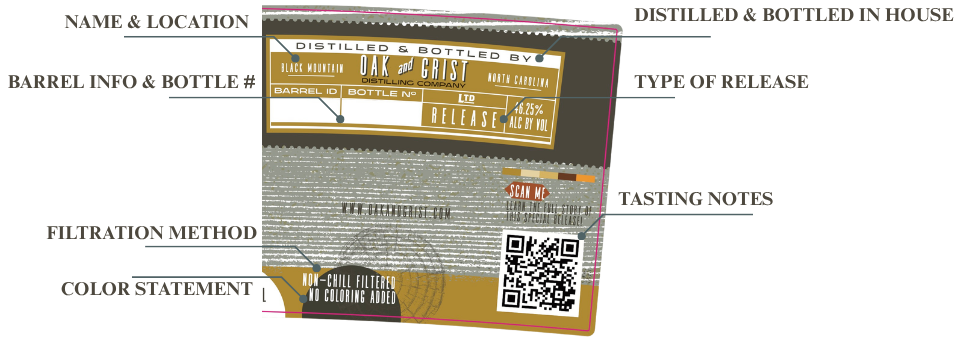
To us, these three phases are among the most important pieces of information on a label. They tell you exactly what the listed distillery did to get the whiskey in the bottle.
Only distilleries actually distilling a product are allowed to use the phrase "Distilled By". This, however, won't tell you whether a distillery is contracting out their fermentation or buying grain neutral spirits to be redistilled.
Distilleries or distillery products that don't get distilled by the brand listed on the label, but do some sort of other process (usually maceration or filtration) are permitted to use the phrase "Produced By". So basically, if a label says "produced by," that brand did not distill (or ferment) the spirit used for their product.
"Bottled By" calls out who actually did the bottling. Since we do all the bottling here at Oak & Grist, that gets added to "distilled by," making it "Distilled and Bottled By Oak & Grist Distilling." In almost all cases, if you see "Bottled By" all alone, the contents are likely a sourced finished product.
Batch Number
Look a little closer, and you'll find the batch number.
This shows which production batch your bottle came from. For a craft spirit, that's helpful because each batch marks a specific moment in the distillery's story.
At Oak & Grist, we use real ingredients, real barrels, and real time. Each batch of whiskey has its own mix of aging and blending choices. Tracking these batches helps us follow the whiskey's story as it matures.
If you have a bottle at home, check the number on it. You could be holding a small piece of Oak & Grist history.
Bottle Number
Your bottle also has its own number within its batch. It's easy to miss that difference.
The batch number identifies the production run. The bottle number identifies the individual bottle from that run.
It's a small detail, but it helps make a craft release feel more personal. Instead of being just one of many identical bottles, yours comes from a specific batch and runs. The typical 53-gallon barrel (depending on evaporation rate & age) will yield between 200 and 250 750mL bottles.
Non-Chill Filtered
If you've spent much time around whiskey, you've probably come across the phrase non-chill-filtered.
Chill filtration removes natural compounds that can make whiskey look cloudy when it's chilled or mixed with water. If we skip chill filtration, more of those natural compounds stay in the whiskey.
For you, that can mean more texture and a fuller taste.
It's another example of a choice that might seem small on the label but actually says a lot about how the distiller thinks about the whiskey. Here at Oak & Grist, we never chill filter our whiskey.
No Coloring Added
The color in your glass is worth noticing too, but may not tell the whole story. In most whiskey-producing nations, there is a permissible amount of caramel color that can be legally added. That's where "no coloring added" comes in.
Oak & Grist never has and never will add caramel coloring.
This means the amber or straw color you see in our whiskey comes from contact with the barrels, not from trying to make every batch look the same.
For us, that's part of letting the whiskey be what it is. Color can also help you identify what type of barrel a whiskey was in. (In General: really dark amber>new oak, light straw, and golden=used oak)
Read the Tasting Notes
Finally, there's the part of the label that tells you what you might actually experience when you drink it.
For our 2026 5-year single barrel, we describe the profile with notes of:
currant/cassis, cedar, Szechuan peppercorn, Mexican chocolate, fig jam.
These aren't rules for how you're supposed to taste the whiskey. They're a starting point. Everyone experiences flavor and aroma differently, and some are more naturally adept at perceiving nuance. Like anything in life, the more you practice, the better you get at finding nuance in whiskey.
Pour it neat and see what you notice. Add a little water. Try it over ice. Put it in an Old Fashioned or a Boulevardier. Our 5 Year Single Barrel is a whiskey you can spend some time with, but why not put it in a cocktail?
Double Distilled
Just below the style designation, you may find "Double Distilled" or "Triple Distilled". We don't list this on our labels, but we always double distill our whiskey.
This refers to the number of times the spirit goes through the still during distillation. At Oak & Grist, our double distilling process helps shape the whiskey's character before it even reaches a barrel.
Each sip becomes a conversation between the malt, the oak, and the spirit that came before it.
So, What Does the Label Tell You?
A lot, actually.
Our 5 Year Single Barrel Single Malt label tells you it is made from 100% malted barley and distilled from that barley at Oak & Grist. It was aged for 5 years, and only one barrel went into the bottling. The whiskey is non-chill-filtered, and no caramel coloring was added. It was bottled by Oak & Grist at 92.5% abv, and only 317 bottles came from that barrel.
But the label only gives you the outline.
The real story is everything behind the label: the local grain, the fermentation, the stills, the barrels, the time, and all the choices that make Oak & Grist whiskey unique.
That's what we mean when we say we make spirits from grain to glass.
Read the Label. Then Taste the Story.
Next time you see a bottle of our whiskey, take a closer look.
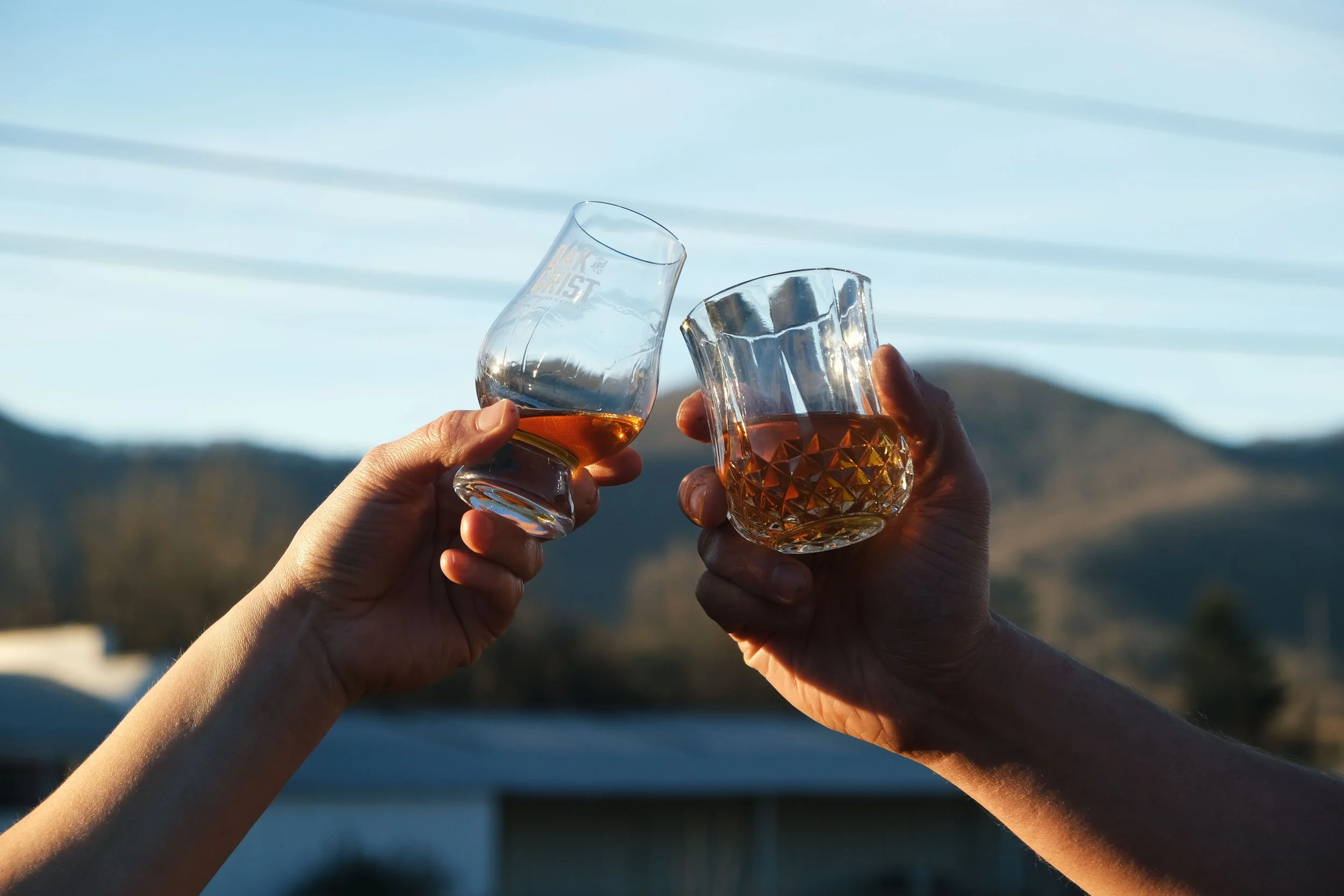
If you want to go beyond the label, come visit us! Ask questions or sit down and try a pour yourself. We're always happy to talk whiskey, whether you're new to it or have been collecting bottles for years.
The label can tell you a lot about what you're drinking. The pour tells you everything else you need to know.